최근 투자 시장에서 큰 화제가 되고 있는 OpenAI 샘 올트먼 CEO의 AI 버블 경고에 대해 말씀드리고자 합니다.
ChatGPT 개발사인 OpenAI의 최고경영자 샘 올트먼이 최근 인공지능 시장의 투자 열풍과 관련해 닷컴 버블과 유사한 과열 현상이 나타나고 있다고 경고한 이후, 많은 투자자분들이 궁금해하시는 내용일 것 같습니다.
DB증권 강현기 연구원의 분석 보고서를 중심으로, 현재 AI 시장 상황을 차분히 살펴보고 앞으로의 투자 방향에 대해 함께 고민해보는 시간을 갖고자 합니다.
현재 시장 상황, 과연 2000년 닷컴 버블과 비슷할까요?
먼저 올트먼의 경고가 어떤 근거를 갖고 있는지 살펴보겠습니다.
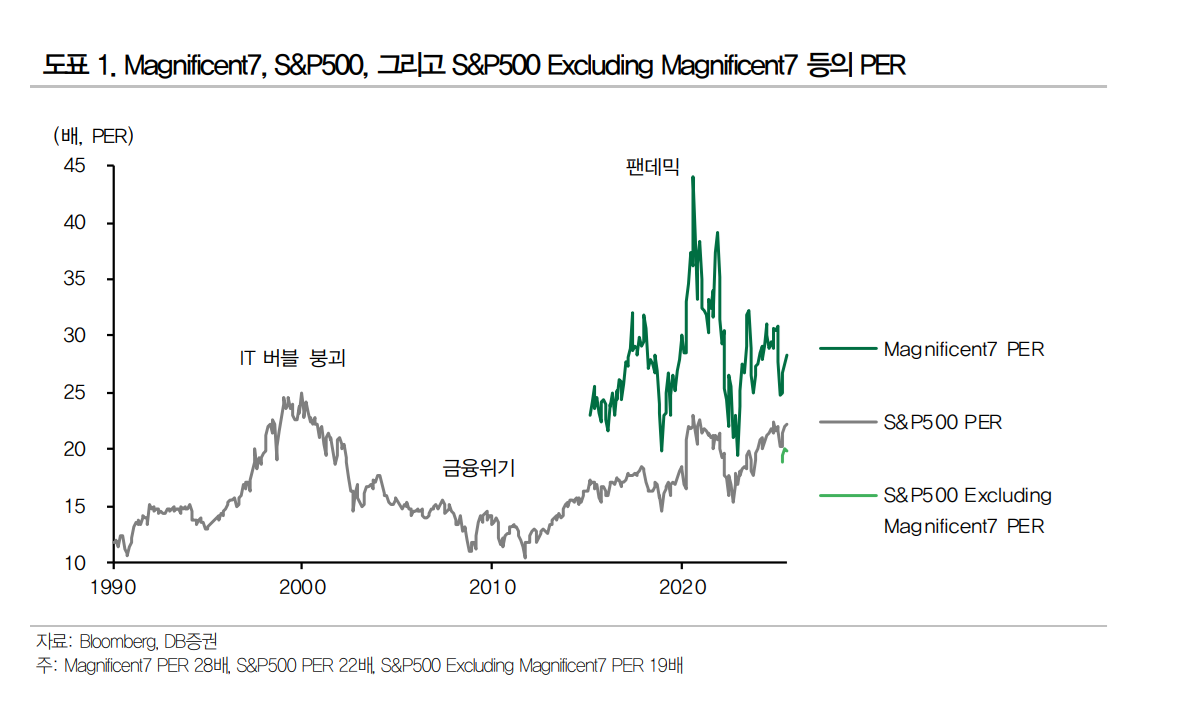
DB증권의 분석에 따르면, 현재 S&P500의 PER(주가수익비율)이 22배에 달한다고 합니다. 이는 2000년 닷컴 버블 붕괴 직전의 25배에 상당히 근접한 수준이라는 점에서 시사하는 바가 큽니다.
샘 올트먼이 최근 AI 시장의 투자 열풍과 관련해 닷컴 버블과 유사한 과열 현상이 나타나고 있다고 경고했다는 점에서 보듯, 이는 단순한 기우가 아닐 수 있습니다.
특히 주목해야 할 부분은 AI 열풍을 주도해온 빅테크 기업들의 성장세 변화입니다. 이른바 'Magnificent 7(M7)'으로 불리는 애플, 아마존, 알파벳, 마이크로소프트, 메타 플랫폼스, 테슬라, 엔비디아 등 주요 기술기업들의 현황을 들여다보면 흥미로운 점을 발견할 수 있습니다.
이들 M7 기업들의 PER은 28배로 S&P500 평균을 상회하고 있지만, 매출액 증가율은 지난 1년 넘게 하락세를 보이며 이제 일반 기업 수준으로 떨어졌다는 것이 전문가들의 분석입니다.
강현기 연구원은 "M7의 2025년 3분기 및 4분기 매출액 증가율 추정치가 각각 14.5%, 13.6%로 여타 기업들과 크게 다르지 않다"며, "기업이 이익을 내더라도 성장률이 하락하면 밸류에이션은 낮아지기 마련"이라고 설명했습니다.
그렇다면 과거 닷컴 버블과 완전히 같다고 볼 수 있을까요?
물론 현재 상황을 과거 닷컴 버블과 단순 비교하기는 어렵다는 의견도 있습니다.
2000년 당시 관련 기업 상당수가 이익을 창출하지 못했던 것과 달리, 현재 AI 산업을 선도하는 M7 기업들은 견고한 수익성을 유지하고 있다는 점이 가장 큰 차이점입니다.
이는 단순한 투기적 거품이 아닌 실제 비즈니스 모델에 기반한 성장이라는 해석을 가능하게 합니다. 실제로 미국 증시의 대표 지수인 스탠더드앤드푸어스(S&P)500 지수가 2년 연속 20%대의 상승률을 지속하면서 2024년의 마지막 거래를 마무리했고, 2023~2024년 2년간의 수익률은 53%에 달한다고 하니, M7 기업들의 실적 기여도가 상당함을 알 수 있습니다.
다만 성장률 둔화로 인한 밸류에이션 부담은 여전히 유효한 리스크 요인으로 남아있다는 점은 간과해서는 안 될 것 같습니다. 투자자로서는 이 두 가지 관점을 균형 있게 고려해야 할 시점인 것 같습니다.
핵심은 올해 하반기 미국 금리 정책 변화
DB증권에서 가장 주목해야 한다고 강조한 부분은 바로 올해 하반기 미국 기준금리 인하 시기입니다. 일반적으로 금리 인하하면 주가 상승을 떠올리기 쉽지만, 실제로는 그렇지 않을 수 있다는 점이 흥미롭습니다.
강현기 연구원은 "세간의 믿음과 달리, 기준금리 인하가 경기 둔화 이후 뒤늦게 진행될 때는 즉시 주가를 상승시키지 못하고, 오히려 눈앞의 경기 둔화에 연동하여 주가가 하락할 수 있다"고 설명했습니다.
현재 미국 고용시장 위축 이후 기준금리 인하 논의가 나타나고 있는 상황을 고려할 때, 이는 매우 시사하는 바가 큰 분석이라고 생각됩니다.
또한 금리 인하 시점에는 미국채의 인기가 높아지면서 채권 시장으로 자금이 이동하고 주식 시장이 위축될 가능성도 배제할 수 없다고 합니다. 투자자 입장에서는 다양한 시나리오를 염두에 두고 대비해야 할 것 같습니다.
투자자들의 포트폴리오 재배치 가능성
특히 흥미로운 부분은 향후 투자자들의 행동 패턴 변화에 대한 전망입니다. M7의 매출액 증가율이 일반 기업들과 크게 다르지 않은 상황에서, 투자자들은 제한된 자금 하에서 보다 효율적인 투자처를 물색할 가능성이 높다고 분석됩니다.
DB증권은 "투자자들이 M7과 유사한 성장률을 기록하면서도 더 내실 있게 실적을 올리는 저평가 기업의 주식으로 자금을 이동시킬 가능성이 있다"며, "이로 인해 샘 올트먼의 발언을 더 진지하게 받아들일 여지가 있다"고 분석했습니다.
이러한 관점에서 보면, 현재는 단순히 AI나 빅테크 기업에만 집중하기보다는 전체적인 포트폴리오의 균형을 다시 한번 점검해볼 필요가 있을 것 같습니다. 특히 상대적으로 저평가된 가치주나 배당주 등에도 관심을 가져볼 만한 시점인 것 같습니다.
개인 투자자로서 어떻게 대응해야 할까요?
이번 분석을 통해 얻을 수 있는 교훈은 무엇일까요? 저는 다음과 같이 정리해보고 싶습니다.
첫째, AI 관련 주식에 대한 맹목적 투자보다는 보다 신중한 접근이 필요하다는 점입니다. 물론 AI 기술 자체는 여전히 혁신적이고 장기적으로 성장 가능성이 높은 분야임은 분명합니다. 하지만 현재의 주가 수준이 미래 가치를 적절히 반영하고 있는지는 한번 더 생각해봐야 할 것 같습니다.
둘째, 올해 하반기 미국 통화정책 변화와 그에 따른 시장 자금 흐름의 변화를 면밀히 관찰해야 한다는 점입니다. 금리 인하가 반드시 주가 상승을 의미하지 않을 수 있다는 점을 염두에 두고, 다양한 시나리오에 대비한 투자 전략을 수립하는 것이 중요할 것 같습니다.
셋째, 포트폴리오의 다변화를 통해 리스크를 분산하는 것이 필요하다고 생각합니다.
M7 중심의 투자에서 벗어나 상대적으로 저평가된 기업들이나 안정적인 배당주 등을 함께 고려해보는 것도 좋은 방법일 것 같습니다.
마무리하며
샘 올트먼의 버블 경고가 자기실현적 예언이 될지, 아니면 단순한 우려에 그칠지는 앞으로 몇 개월간의 시장 상황 전개에 달려있을 것입니다. 하지만 현재의 밸류에이션 수준과 성장률 둔화 추세를 고려할 때, 투자자로서는 각별한 주의가 요구되는 상황임은 분명해 보입니다.
투자에 있어서 가장 중요한 것은 냉정한 판단력과 균형감각이라고 생각합니다. 시장의 열기에 휩쓸리지 않고, 객관적인 데이터와 전문가들의 분석을 바탕으로 신중하게 결정을 내리는 것이 필요한 시점입니다.
여러분의 소중한 자산을 지키면서도 합리적인 수익을 추하는 현명한 투자가 되시길 바라며, 앞으로도 유용한 투자 정보를 지속적으로 공유해드리도록 하겠습니다. 감사합니다.
The Hot Topic in AI Markets: How Should We View Sam Altman's 'Bubble Warning'?
Hello everyone. Today, I'd like to discuss OpenAI CEO Sam Altman's recent AI bubble warning that has been making waves in investment circles. After the ChatGPT developer's chief executive recently cautioned about overheating in the artificial intelligence market, drawing parallels to the dot-com bubble, I'm sure many of you investors are curious about what this means.
Based on the analysis report by DB Securities researcher Kang Hyeon-gi, I'd like to take a measured look at the current AI market situation and think together about future investment directions.
Is the Current Market Really Similar to the 2000 Dot-Com Bubble?
Let's first examine what grounds Altman's warning might have. According to DB Securities' analysis, the current S&P 500's PER (Price-to-Earnings Ratio) has reached 22 times. This is quite close to the 25 times ratio just before the dot-com bubble burst in 2000, which is quite significant.
As Sam Altman recently warned about overheating phenomena similar to the dot-com bubble appearing in AI market investment fever, this may not be mere concern but could have substantial basis.
What's particularly noteworthy is the changing growth trajectory of the big tech companies that have been leading the AI boom. Looking at the current status of the so-called 'Magnificent 7 (M7)' - Apple, Amazon, Alphabet, Microsoft, Meta Platforms, Tesla, and NVIDIA - we can discover some interesting points.
While these M7 companies have a PER of 28 times, which exceeds the S&P 500 average, their revenue growth rates have been declining for over a year and have now fallen to the level of ordinary companies, according to expert analysis. Researcher Kang Hyeon-gi explained, "The estimated revenue growth rates for M7 in Q3 and Q4 2025 are 14.5% and 13.6% respectively, which aren't significantly different from other companies," and "even if companies are profitable, valuations naturally decrease when growth rates decline."
Can We Say It's Completely the Same as the Past Dot-Com Bubble?
Of course, there are opinions that it's difficult to simply compare the current situation to the past dot-com bubble. The biggest difference is that while many related companies during 2000 failed to generate profits, the M7 companies currently leading the AI industry maintain solid profitability.
This allows for the interpretation that this is growth based on actual business models rather than mere speculative bubbles. Indeed, the Standard & Poor's (S&P) 500 index, representing the US stock market, finished its final trading sessions of 2024 after sustaining over 20% growth rates for two consecutive years, with a two-year return from 2023-2024 reaching 53%. This shows the considerable contribution of M7 companies' performance.
However, the valuation burden due to slowing growth rates remains a valid risk factor that shouldn't be overlooked. As investors, it seems we need to consider both perspectives in a balanced manner.
The Key is US Interest Rate Policy Changes in the Second Half of This Year
The part that DB Securities emphasized as most important to watch is the timing of US base rate cuts in the second half of this year. While people generally think of rate cuts leading to stock price increases, the reality might not be so straightforward.
Researcher Kang Hyeon-gi explained, "Contrary to popular belief, when base rate cuts are implemented belatedly after economic slowdown, they don't immediately boost stock prices and may actually cause stock prices to fall in conjunction with the immediate economic slowdown." Given that discussions about base rate cuts are emerging after the current weakening of the US job market, I believe this is a very insightful analysis.
Additionally, during rate cut periods, US Treasury bonds may gain popularity, leading to capital migration to the bond market and potential contraction in the stock market. From an investor's perspective, it seems we need to prepare for various scenarios.
Possibility of Investor Portfolio Reallocation
A particularly interesting aspect is the forecast regarding changes in investor behavior patterns. With M7's revenue growth rates not significantly different from ordinary companies, investors are likely to seek more efficient investment opportunities under limited capital constraints.
DB Securities analyzed that "investors may move funds to stocks of undervalued companies that record similar growth rates to M7 while generating more substantial earnings," and "this could lead to more serious consideration of Sam Altman's statements."
From this perspective, rather than simply concentrating on AI or big tech companies, it seems necessary to reexamine the overall balance of our portfolios. It appears to be a good time to pay attention to relatively undervalued value stocks or dividend stocks as well.
How Should Individual Investors Respond?
What lessons can we draw from this analysis? I'd like to summarize as follows:
First, a more cautious approach is needed rather than blind investment in AI-related stocks. While AI technology itself is certainly innovative and has high long-term growth potential, we should reconsider whether current stock price levels appropriately reflect future value.
Second, we must closely observe changes in US monetary policy in the second half of this year and the resulting changes in market capital flows. Keeping in mind that rate cuts may not necessarily mean stock price increases, it's important to establish investment strategies prepared for various scenarios.
Third, I believe it's necessary to diversify portfolios to spread risk. Moving away from M7-centered investment to also consider relatively undervalued companies or stable dividend stocks seems like a good approach.
In Closing
Whether Sam Altman's bubble warning becomes a self-fulfilling prophecy or remains merely a concern will depend on market developments over the next few months. However, considering current valuation levels and slowing growth trends, it's clear that investors need to exercise particular caution.
I believe the most important things in investing are cool-headed judgment and a sense of balance. It's crucial not to get swept up in market excitement but to make careful decisions based on objective data and expert analysis.
I hope you all make wise investments that protect your valuable assets while pursuing reasonable returns. I'll continue to share useful investment information with you going forward. Thank you.
'주식 코인 투자 따라잡기' 카테고리의 다른 글
| [뉴욕증시] 2025년 2분기 빅테크 실적 완벽분석 (3) | 2025.09.05 |
|---|---|
| ‘케데몬’과 코스피 5000, 두 세계의 속도 차이 (4) | 2025.08.24 |
| 삼성전자, 엔비디아(NVIDIA) HBM3E 공급 기대 (3) | 2025.08.14 |
| LS에코에너지, 베트남 석유기술서비스총공사와 공동개발협약 체결 (3) | 2025.08.12 |
| [재테크 필독] TIGER 타겟데일리커버드콜 ETF 상장 1주년 리뷰 (0) | 2025.08.12 |